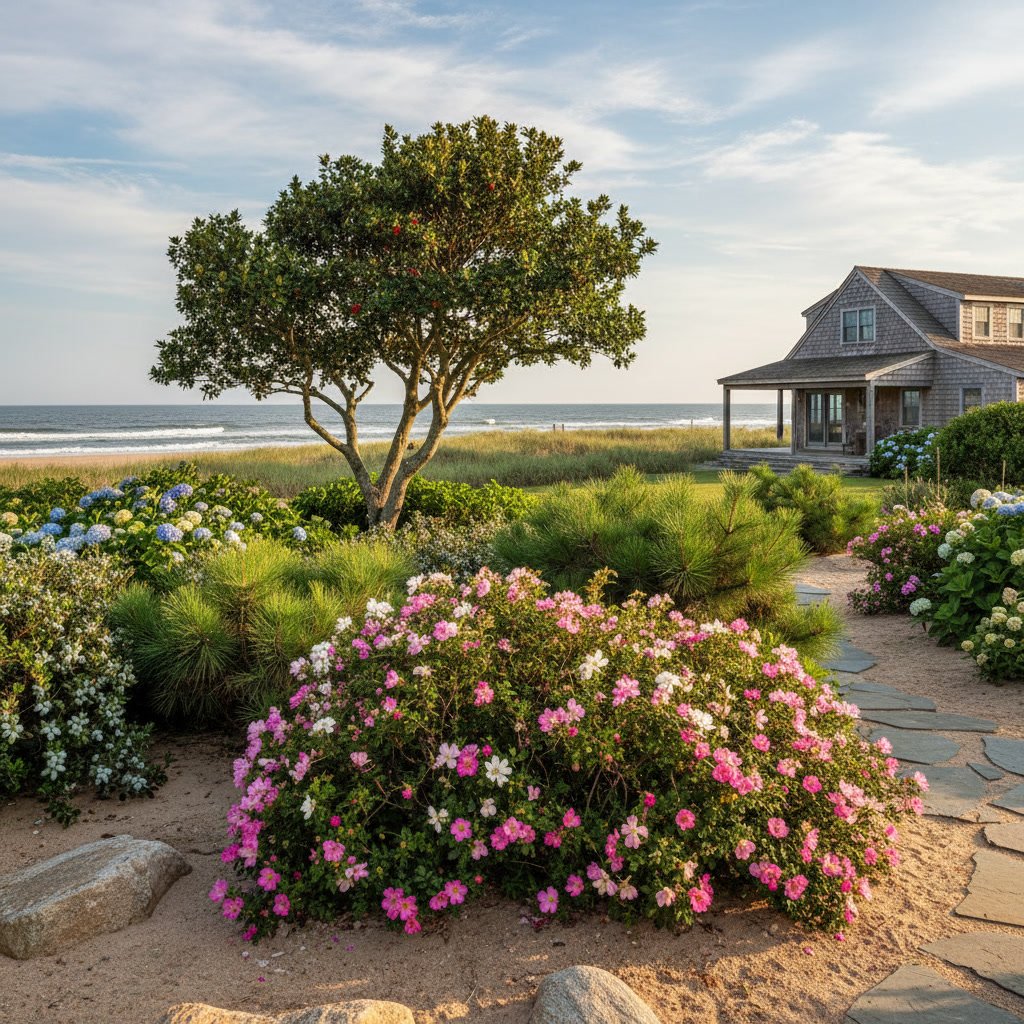
Coastal Long Island homeowners face a unique landscaping challenge. Salt spray from the ocean, sandy soil with poor nutrient retention, and relentless winds can quickly turn your dream landscape into a struggle. Many popular trees and shrubs simply cannot survive these conditions, leaving yards looking sparse and struggling year after year.
Choosing the best trees Long Island coastal properties need requires understanding what thrives in maritime environments. The right selections will not only survive but flourish, creating privacy, shade, and year-round beauty without constant replacement or intensive maintenance. This guide covers the most reliable species for Long Island’s south shore communities, from salt-tolerant evergreens to hardy flowering shrubs that can handle whatever the Atlantic throws their way.
Understanding Long Island’s Coastal Growing Conditions
Before selecting plants, you need to understand what makes coastal Long Island different from inland areas. The proximity to salt water creates environmental stresses that eliminate many common landscape plants from consideration.
Salt spray affects plants in two ways. Direct contact with foliage causes leaf burn and dehydration, while salt accumulation in soil damages root systems and prevents nutrient uptake. Properties within a mile of the ocean experience the most severe exposure, but even areas several miles inland see occasional salt damage during strong coastal storms.
Sandy soil dominates most of Long Island. While it drains well and prevents root rot, it also leaches nutrients quickly and struggles to retain moisture during dry periods. Successful plants must tolerate both drought conditions and occasional flooding from heavy rain or storm surge.
Wind presents another constant challenge. Sustained winds dry out foliage, break branches, and physically damage tender growth. The best trees Long Island coastal landscapes support have flexible branches, strong root systems, and leaves that resist wind damage.
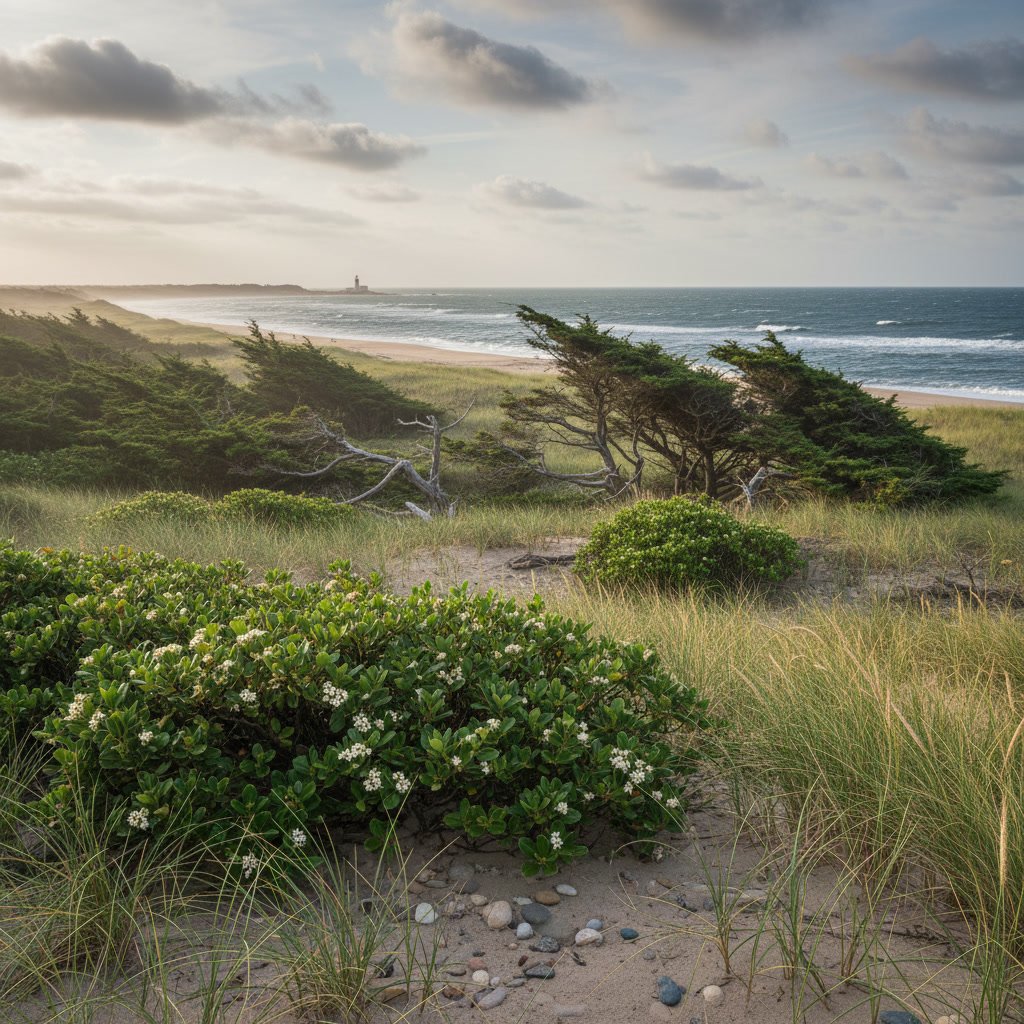
Top Evergreen Trees for Coastal Long Island
Evergreens provide year-round structure, privacy screening, and windbreaks that protect more delicate plants. These species have proven themselves reliable performers in coastal conditions.
Eastern Red Cedar
Eastern Red Cedar (Juniperus virginiana) stands as one of the most salt-tolerant trees available. This native species grows 40 to 50 feet tall with a pyramidal shape that naturally deflects wind. The dense, dark green foliage remains attractive through winter, and the tree requires virtually no maintenance once established.
Red Cedar tolerates poor, sandy soil and drought conditions better than almost any other evergreen. It grows slowly, which actually works to your advantage in windy coastal locations, as the tree develops a strong, anchoring root system before gaining height.
Japanese Black Pine
Japanese Black Pine (Pinus thunbergii) was specifically bred for coastal conditions and performs exceptionally well in salt spray zones. Mature trees reach 20 to 40 feet with irregular, artistic branching patterns that add character to landscapes.
This pine handles sandy soil, salt exposure, and wind with equal ease. The long needles and textured bark provide visual interest, and the tree serves as an excellent windbreak for protecting other plantings. Professional tree and shrub installation ensures proper planting depth and staking for young specimens.
American Holly
American Holly (Ilex opaca) offers glossy evergreen leaves, red berries, and moderate salt tolerance in a package that grows 15 to 30 feet tall. While not quite as salt-resistant as Red Cedar or Black Pine, Holly performs well in second-line positions, protected from direct ocean spray by more tolerant species.
Holly trees provide excellent screening and attract birds throughout winter. They prefer slightly acidic soil and benefit from mulch applications to retain moisture in sandy conditions.
Deciduous Trees That Handle Salt and Wind
While evergreens dominate coastal landscapes, several deciduous trees offer seasonal color, shade, and ornamental value without succumbing to maritime conditions.
London Plane Tree
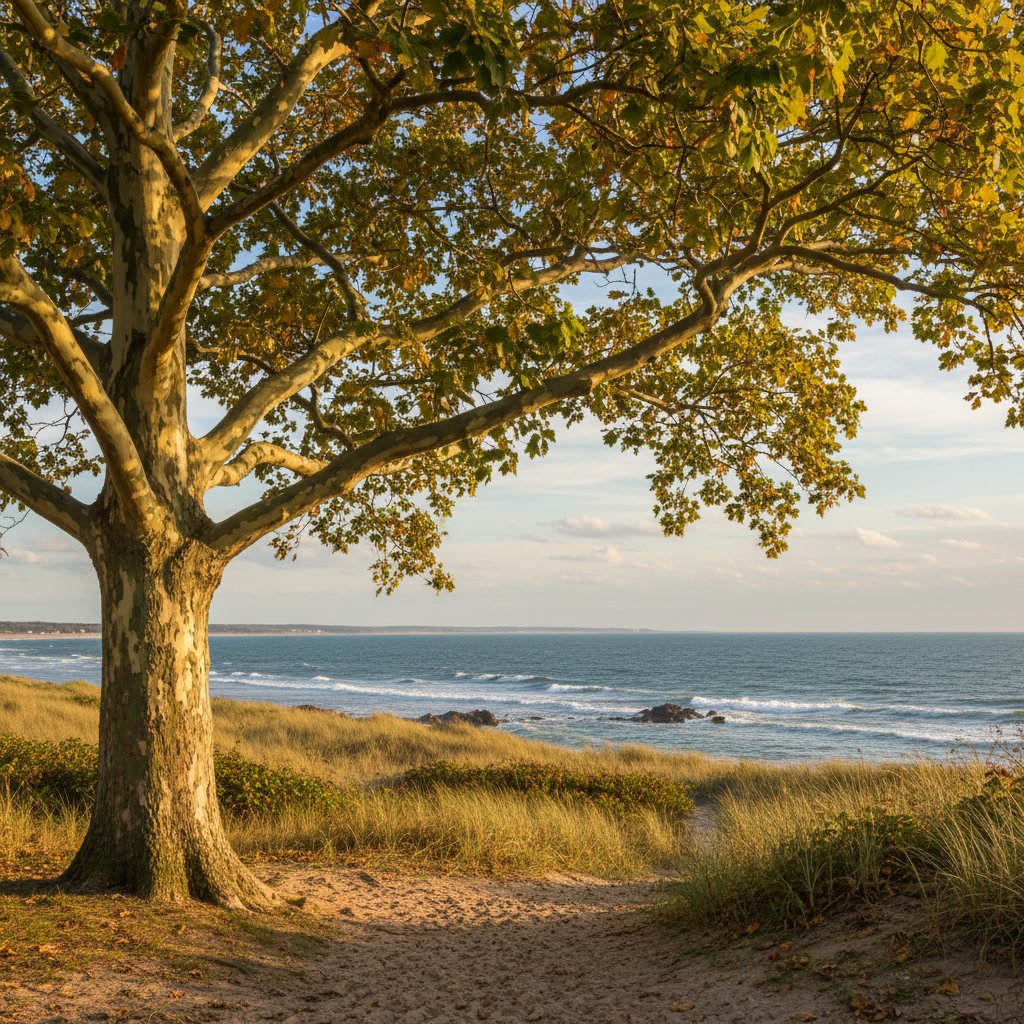
London Plane (Platanus × acerifolia) combines impressive salt tolerance with rapid growth and massive shade coverage. Mature specimens reach 70 to 100 feet with broad, spreading canopies ideal for cooling properties during summer months.
The exfoliating bark creates winter interest with its patchwork of cream, olive, and brown. London Plane handles urban pollution, compacted soil, and drought, making it one of the most versatile large trees available for challenging sites.
Red Oak
Red Oak (Quercus rubra) grows quickly for an oak species, reaching 60 to 75 feet with brilliant fall color. While not as salt-tolerant as London Plane, Red Oak performs well in protected coastal areas and inland properties throughout Babylon, Massapequa, and similar communities.
Red Oak prefers well-drained soil and full sun. Once established, it tolerates drought and provides decades of shade and beauty with minimal care.
Sycamore
American Sycamore (Platanus occidentalis) shares many characteristics with its hybrid relative, London Plane, but reaches even larger sizes. This native tree tolerates wet conditions better than most, making it valuable for low spots that periodically flood.
Sycamore’s white and tan exfoliating bark stands out in winter landscapes. The massive leaves provide dense summer shade, and the tree’s deep root system makes it highly wind-resistant.
Salt-Tolerant Shrubs for Foundation and Border Planting
Shrubs create landscape layers, foundation plantings, and property borders. These species handle coastal conditions while providing flowers, berries, or evergreen structure.
Inkberry Holly
Inkberry (Ilex glabra) offers evergreen foliage, compact growth to 6 to 8 feet, and exceptional salt tolerance. This native shrub thrives in full sun to part shade and tolerates wet or dry conditions equally well.
Inkberry works perfectly for foundation plantings, low hedges, or massed border plantings. The small black berries provide winter food for birds, and the dense branching creates excellent screening year-round.
Rosa Rugosa
Beach Rose (Rosa rugosa) grows wild along Long Island’s beaches, which tells you everything about its salt tolerance. This tough shrub produces fragrant pink or white flowers all summer, followed by large orange-red hips in fall.
Rosa rugosa spreads through underground runners, making it ideal for stabilizing sandy slopes or creating informal hedges. The wrinkled leaves resist disease, and the plant requires absolutely no pampering.
Bayberry
Northern Bayberry (Myrica pensylvanica) is another coastal native that handles salt spray, sandy soil, and drought without complaint. This semi-evergreen shrub grows 6 to 10 feet tall with aromatic gray-green foliage.
The waxy gray berries persist through winter and provide food for birds. Bayberry fixes nitrogen in soil, actually improving growing conditions for neighboring plants over time.
Japanese Pittosporum
Japanese Pittosporum (Pittosporum tobira) provides glossy evergreen leaves and fragrant spring flowers in a compact form reaching 8 to 12 feet. This shrub handles salt exposure remarkably well and grows in full sun to part shade.
Pittosporum works beautifully as a foundation plant or in mixed shrub borders. The dense foliage prunes easily for formal shapes or can be left natural for a relaxed appearance.
Pro Tip: Layer your plantings with the most salt-tolerant species closest to the ocean, using them as windbreaks to protect less tolerant plants behind them. This strategy extends your plant palette while creating depth and interest in your landscape design.
Native Grasses and Groundcovers for Coastal Properties
While not trees or shrubs, ornamental grasses and groundcovers deserve mention for their exceptional coastal performance and ability to complement woody plants.
Switchgrass (Panicum virgatum) grows 3 to 6 feet tall with airy seed heads that shimmer in fall and winter. This native prairie grass handles salt, sand, and wind while requiring zero maintenance beyond an annual late-winter cutting.
Dune Grass (Ammophila breviligulata) stabilizes sand better than any other plant. If your property includes dunes or severely sandy areas, this grass holds soil while creating natural-looking screens.
For groundcover in partial shade, consider Bearberry (Arctostaphylos uva-ursi). This evergreen spreads slowly to form a dense mat with small glossy leaves, pink spring flowers, and red berries. It tolerates sandy soil and salt exposure while suppressing weeds.
Planting and Care Strategies for Coastal Success
Even the best trees Long Island landscapes can support need proper installation and initial care to establish strong root systems. Coastal conditions require a few extra considerations beyond standard planting practices.
Soil Amendment
Sandy soil benefits from organic matter additions. Work compost or aged manure into planting holes to improve water retention and add nutrients. However, don’t overdo amendments, as plants need to adapt to surrounding soil conditions to thrive long-term.
Regular mulch applications maintain soil moisture, moderate temperature swings, and add organic matter as the mulch decomposes. Keep mulch 2 to 3 inches away from tree trunks to prevent rot.
Watering During Establishment
New plantings need consistent moisture for the first two growing seasons while roots expand into surrounding soil. Sandy soil drains quickly, so water deeply but frequently, especially during dry spells.
Once established, most coastal-adapted species tolerate drought well. An irrigation system can automate watering during the critical establishment period and provide supplemental moisture during extreme dry conditions.
Wind Protection for Young Trees
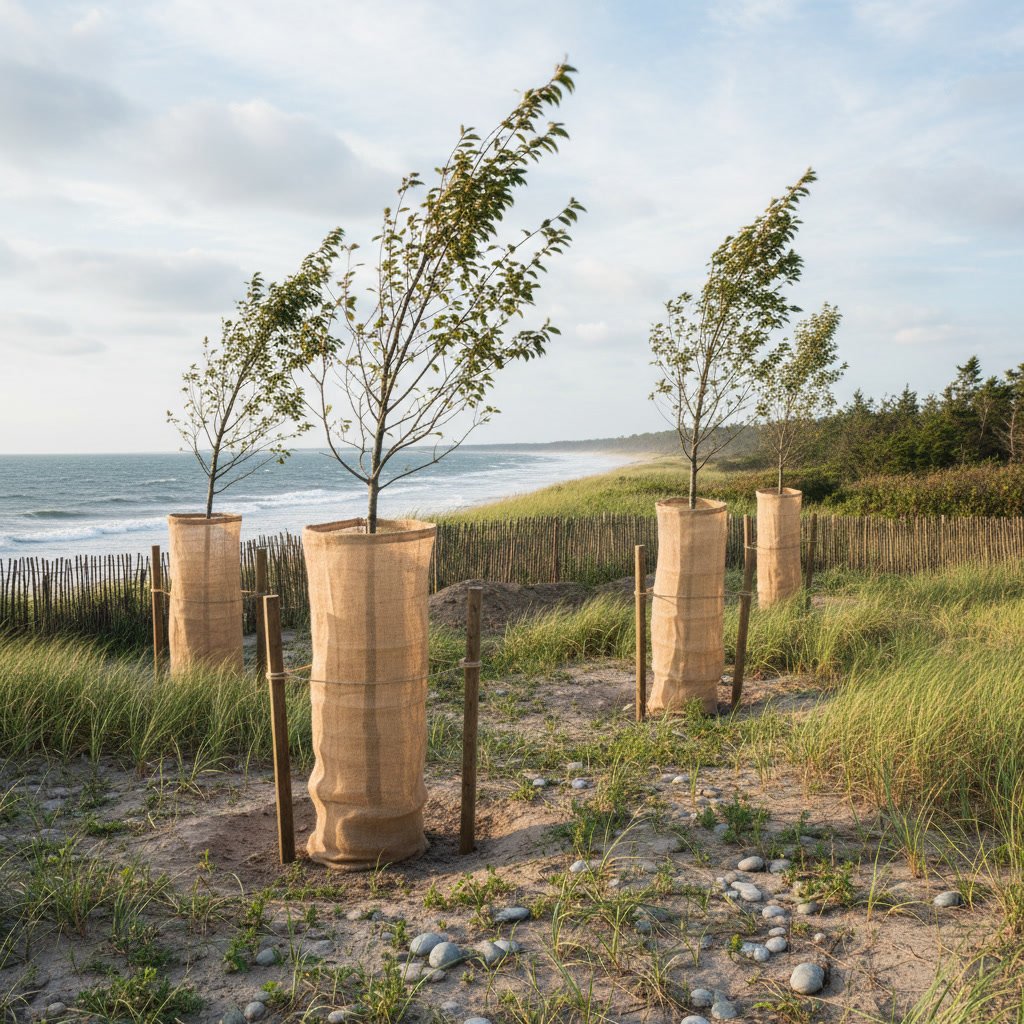
Newly planted trees need staking in windy locations, but proper technique matters. Use flexible ties that allow some trunk movement, which strengthens the stem. Remove stakes after one year to prevent girdling and allow natural strengthening.
Consider installing temporary burlap screens on the windward side of young evergreens during their first winter. This protects foliage from desiccating winds and salt spray until plants develop tougher leaves.
Seasonal Maintenance for Coastal Landscapes
Salt-tolerant species require less maintenance than typical landscape plants, but a few seasonal tasks keep them looking their best.
Spring brings the heaviest maintenance needs. Remove any branches damaged by winter storms or salt exposure. Apply a balanced slow-release fertilizer to trees and shrubs before new growth begins. Early spring is also the ideal time for pruning most species.
Summer focuses on watering, especially for recently planted material. Monitor plants for signs of drought stress like wilting or leaf drop and adjust irrigation accordingly.
Fall seasonal cleanup removes leaves and debris before winter. This is also the best time for planting new trees and shrubs, as cooler temperatures and fall rains help establish roots before winter dormancy.
Winter requires minimal active maintenance beyond removing heavy snow from evergreen branches to prevent breakage. However, this is an excellent time to plan landscape additions and schedule spring installations.
Design Considerations for Coastal Landscapes
Selecting the right species is only half the battle. Thoughtful design maximizes their impact while creating functional, beautiful outdoor spaces.
Create windbreaks using rows of mixed evergreens on the windward side of your property. This protects the rest of your landscape and home from salt spray and wind damage. Stagger plantings in multiple rows for the most effective protection.
Layer plants by height, placing taller trees as background elements and using shrubs and groundcovers to fill foreground areas. This creates depth and visual interest while ensuring each plant receives adequate light.
Group plants with similar water needs together. Place drought-tolerant species in exposed, sandy areas and reserve plants with higher water needs for areas with better soil or supplemental irrigation.
Don’t forget hardscape elements. Professional landscape design integrates plantings with patios, pathways, and structures to create cohesive outdoor living spaces that function year-round.
Key Takeaway: The most successful coastal landscapes combine multiple salt-tolerant species in layered plantings that create wind protection, visual interest, and functional outdoor spaces. Diversity prevents disease issues and ensures something looks attractive every season.
Common Mistakes to Avoid
Even experienced gardeners make mistakes when transitioning to coastal landscaping. Avoid these common pitfalls to save time and money.
Don’t plant salt-sensitive species in exposed locations hoping they’ll adapt. They won’t. Japanese Maples, Dogwoods, and many flowering trees simply cannot survive direct salt exposure no matter how well you care for them.
Avoid over-fertilizing. Sandy soil leaches nutrients quickly, which tempts people to apply heavy fertilizer applications. This creates lush, weak growth that’s more susceptible to wind damage and salt injury. Light, frequent applications work better than heavy seasonal doses.
Don’t neglect irrigation during establishment. The biggest reason new plantings fail in coastal areas is inadequate watering during their first two years. Even drought-tolerant species need consistent moisture until roots establish.
Resist the urge to prune constantly. Salt exposure and wind naturally create interesting, sculptural forms in coastal trees and shrubs. Heavy pruning removes this character and forces plants to produce tender new growth that’s more susceptible to damage.
Frequently Asked Questions
What trees grow fastest in coastal Long Island conditions?
London Plane Tree and Red Oak grow fastest among salt-tolerant species, adding 2 to 3 feet per year once established. Sycamore also grows quickly in areas with adequate moisture. Among evergreens, Japanese Black Pine grows faster than most, though still slower than deciduous options at 12 to 18 inches annually.
How close to the ocean can I plant trees and expect them to survive?
Eastern Red Cedar, Japanese Black Pine, and Beach Rose can be planted within 100 feet of the ocean with direct salt spray exposure. Most other salt-tolerant species perform better at least 300 feet from direct ocean exposure or behind a windbreak of more tolerant species. Properties further than half a mile from the ocean can support a much wider range of plants.
Do I need special soil for coastal plantings?
The species recommended here are selected specifically because they tolerate Long Island’s naturally sandy soil. Adding organic matter at planting improves initial establishment, but you don’t need to replace native soil entirely. Plants must adapt to surrounding conditions to thrive long-term, so excessive soil amendment can actually harm their development.
When is the best time to plant trees and shrubs on Long Island?
Fall planting, from late September through November, gives plants the best start in coastal conditions. Cool temperatures and fall rains encourage root growth without the stress of summer heat. Spring planting works too, but requires more diligent watering through the first summer. For more guidance, see our article on the best time to install sod, which covers similar seasonal considerations.
How much maintenance do coastal landscapes require?
Once established, properly selected coastal plants require minimal maintenance compared to traditional landscapes. Expect to spend time on spring pruning, occasional watering during extreme drought, and annual mulch application. Most maintenance involves removing storm debris rather than intensive plant care. Regular property maintenance keeps landscapes looking their best without excessive time investment.
Building a Landscape That Lasts
Creating a thriving coastal landscape starts with selecting the best trees Long Island conditions support. Eastern Red Cedar, Japanese Black Pine, London Plane, and the salt-tolerant shrubs covered here form the foundation of landscapes that improve with age rather than struggling against their environment.
Success in coastal conditions comes from working with nature rather than fighting it. Choose adapted species, plant them properly, provide care during establishment, and then enjoy decades of beauty with minimal maintenance.
Clean Cut Landscaping LLC brings over a decade of experience creating beautiful, resilient landscapes throughout Lindenhurst, Amityville, West Babylon, and surrounding Long Island communities. Our team understands which species thrive in your specific location and how to install them for long-term success. Contact us at +16315301109 to discuss your coastal landscape project and discover how the right plant selections can transform your property into a low-maintenance outdoor space you’ll enjoy for years to come.